





How to Transition Your Home from Summer to Autumn
Autumn often arrives at home in small ways: a blanket pulled over your knees, a lamp switched on before dinner, or the first evening you close the curtains against the chill. As the days shorten, the light fabrics and open spaces that suited summer can benefit from a little extra warmth.
Updating your autumn home decor does not need to mean repainting rooms or buying new furniture. A few thoughtful changes to textiles, colour and lighting can make familiar spaces feel more inviting. Start with what you already own, then focus on the places where you spend the most time.
Layer Textiles for Comfort and Warmth
Soft furnishings are one of the simplest ways to ease a room into autumn. Keep your existing sofa and neutral cushions as a base, then introduce contrasting textures through a woven throw, velvet cushion covers or a quilted blanket.
You do not need to pack away every summer fabric. Linen works beautifully alongside wool, while lightweight cotton bedding can stay in place with an extra blanket folded at the foot of the bed. Adding layers gives you flexibility during those weeks when warm afternoons still give way to chilly nights.
Choose pieces that are comfortable and practical for everyday use. Washable covers may suit a busy family living room better than delicate fabrics, while a blanket you already love can look fresh when moved from the bedroom to a favourite armchair.
At the windows, heavier curtains or thermal linings can add softness and help reduce heat loss. The Energy Saving Trust’s guide to windows and doors includes thermal curtains among the options for improving comfort. Open them during daylight hours and draw them as evening arrives, keeping radiators clear.
Introduce Autumn Colours in Small Doses
Autumn colours can be subtle. Terracotta, olive green, ochre and warm brown sit comfortably alongside cream, grey and pale wood, bringing depth without overwhelming a room.
Choose two or three complementary shades and repeat them through a handful of accessories. An olive cushion, a rust-coloured throw and a ceramic bowl in a warm neutral can be enough to change the feel of a sofa corner.
Work with your existing palette rather than trying to disguise it. A blue sofa pairs well with coppery tones and warm cream, while a grey room can feel softer with burgundy, wood and textured oatmeal fabrics.
Before buying anything, look around the rest of your home. A vase tucked away in a cupboard or a framed print moved from another room may provide exactly the seasonal detail you need.
Create Softer Evening Lighting
Lighting can make a bigger difference than another decorative purchase. As evenings draw in, try using several lamps to create gentle pools of light around the room.
Place a table lamp beside the sofa or move a floor lamp next to a reading chair. Keep brighter task lighting where you need it, particularly for reading, cooking or working, and use softer light elsewhere.
Warm-white LED bulbs around 2700K are a useful starting point for a cosy effect. If you use dimmers, check that both the bulbs and fittings are compatible.
Candlelight can add atmosphere, but placement matters. Follow London Fire Brigade’s candle safety advice: use suitable heat-resistant holders on stable surfaces, keep flames away from curtains and decorations, and extinguish candles before leaving the room. Battery-operated candles offer a convenient alternative for shelves and decorative displays.

Bring Natural Texture Indoors
A small seasonal arrangement can give a room an autumn feel without filling every surface with decorations.
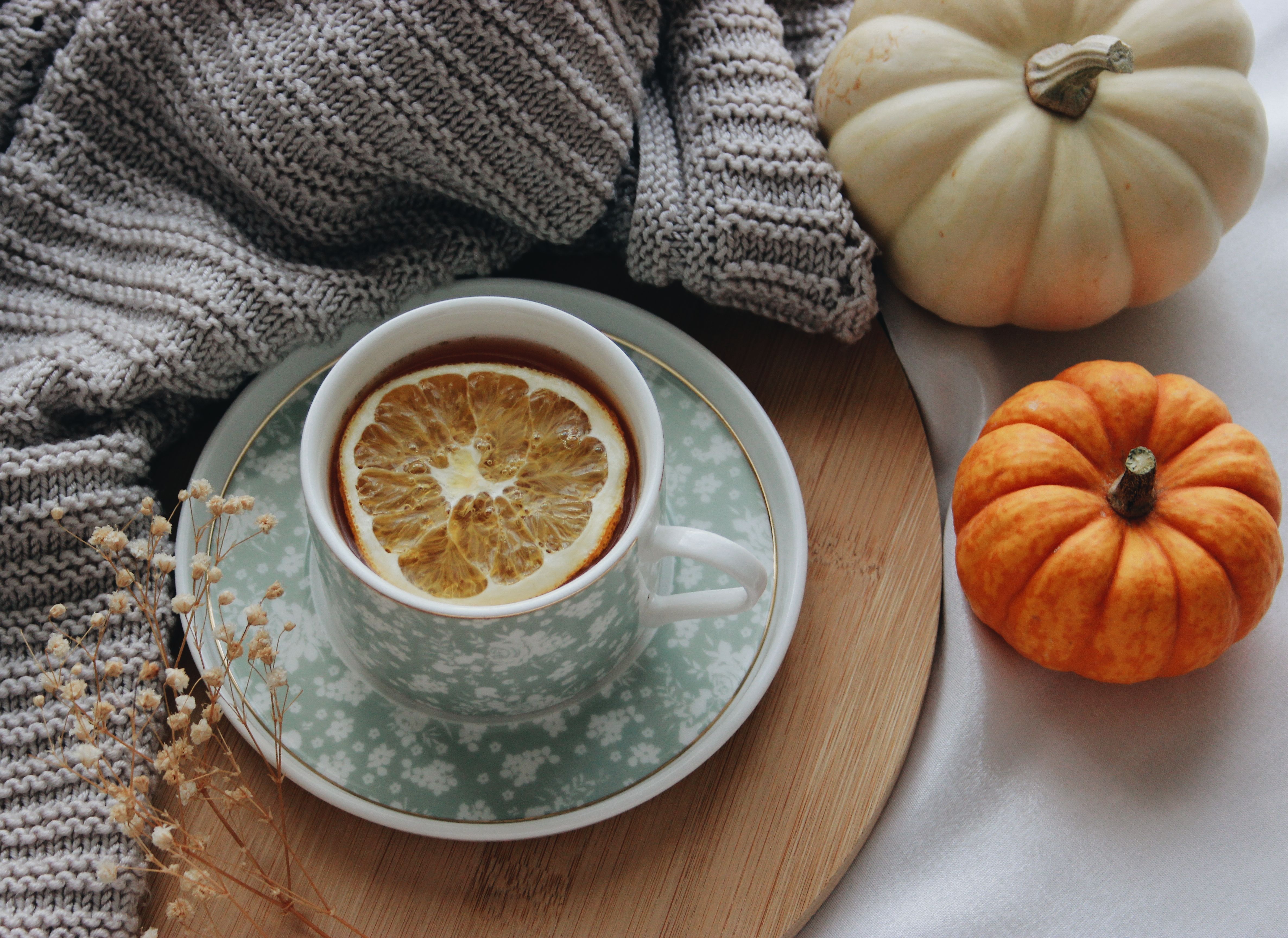
Try dried flowers from a previous bouquet, a few stems from your own garden or a bowl of miniature pumpkins on the dining table. A stoneware jug, wooden bowl or woven basket adds texture and can remain useful throughout the year.
Keep arrangements proportionate to the space. A tall vase may work well on a sideboard, while a low display is more practical on a dining table where people need to see each other.
There is no need to stick to muted colours if you enjoy brighter ones. Traditional orange pumpkins can look cheerful against dark green foliage or a simple cream tablecloth. Choose details that suit your home and taste.
Make Everyday Spaces More Inviting
Autumn decorating works best when it supports how you actually live. Give a reading corner a comfortable throw, a well-positioned lamp and somewhere to put a mug. Add a basket near the entrance for scarves, and clear space for wet shoes before rainy weather becomes routine.
In the kitchen, a few seasonal touches can be enough: fresh tea towels, a bowl of apples or a runner on the dining table. Keep preparation surfaces clear so the room remains easy to use. For more practical ideas, explore our guide to designing a kitchen that works as hard as it looks.
Leave some open floor space, too. A welcoming home should have room for everyday routines, whether that means stretching, playing with children or trying these low-impact indoor workouts for rainy September days from Healthy Living UK.
Finish with Personal Touches
Scent is optional, but a light woody or spicy fragrance can complement an autumn setting if you enjoy it. Avoid layering several competing scents; fresh air and clean textiles may be all you prefer.
The most useful finishing touches are often personal: a favourite book beside your chair, a handmade mug within reach or a blanket brought out each year.
Start with one room and see how it feels before adding more. Softer lighting, an extra layer and a few well-chosen colours can make your home ready for autumn while keeping it comfortably your own.

.jpg)




.svg)