




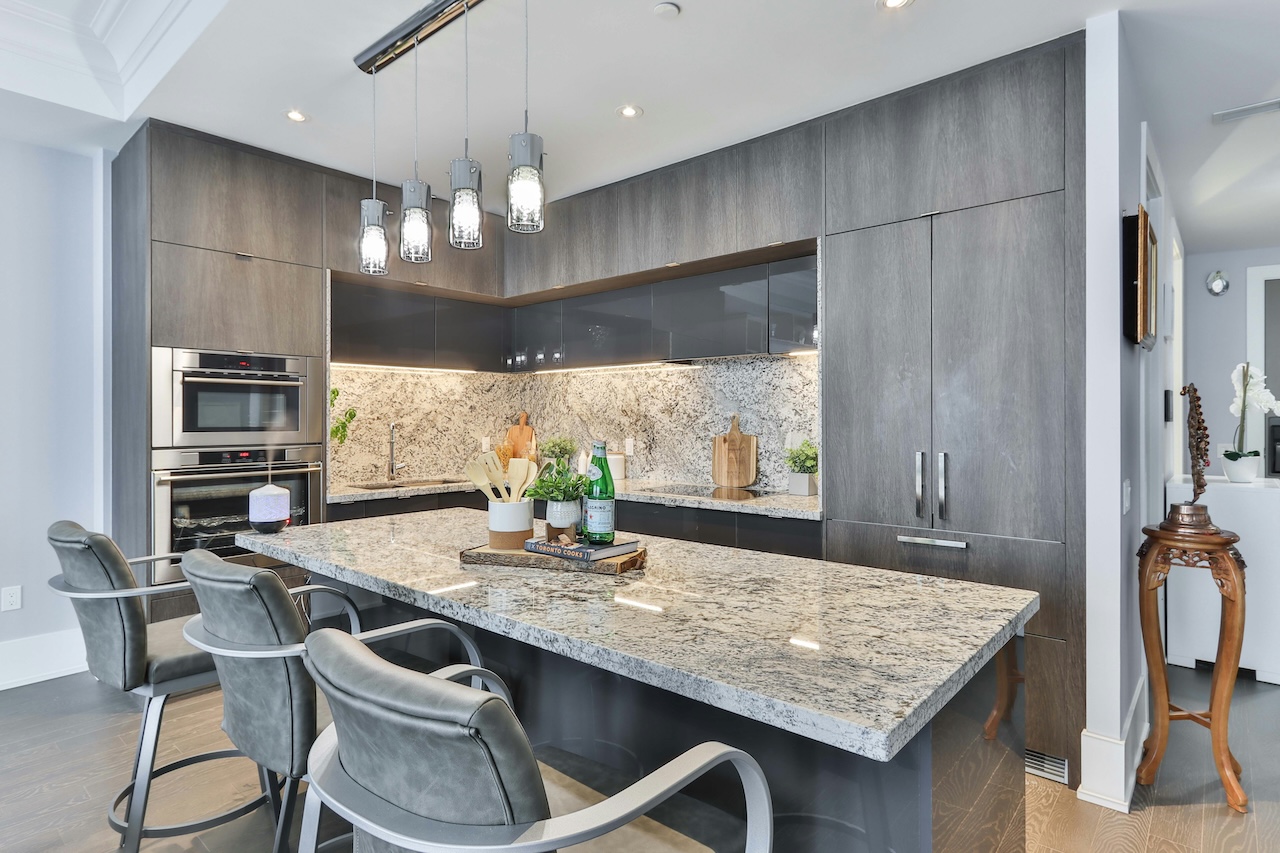



The kitchen is the room that sells houses, anchors daily life, and takes more sustained punishment than any other space in the home. It is also the room where buyers and renovators most consistently underestimate the complexity of truly good design — and where the consequences of poor decisions take the longest to live with, because kitchens rarely get replaced more than once a decade. Whether you are designing from scratch in a new home, planning a comprehensive renovation, or looking to understand what distinguishes a merely functional kitchen from an exceptional one, the four principles in this guide will serve you well.
Starting with the kitchen triangle and zones
Every high-performing kitchen — regardless of its size, style or specification — needs to function efficiently as a space for food preparation, cooking, and cleaning up. The classic design concept of the "kitchen triangle" describes the spatial relationship between the three key elements: the hob, the refrigerator and the sink. Positioning these so that movement between them is unobstructed and the distances are practical creates the workflow efficiency that makes a kitchen genuinely pleasant to use. In larger, more elaborate kitchens, the triangle has evolved into a zones approach: distinct, defined areas for preparation, cooking, baking, cleaning and storage, each with the tools and appliances relevant to that function grouped within comfortable reach.
Getting the zones right before committing to any cabinet layout is the single most important step in kitchen design, and it is the stage most frequently rushed or skipped. Draw your space to scale on squared paper. Mark the door openings, the window positions, the location of existing services (gas, electrical sockets, water supply and drainage), and the direction the doors swing. Then begin mapping where each zone will sit relative to these fixed constraints. Where will you unload the dishwasher? Where will you put down shopping bags when you return from the supermarket? Where does the bin need to be in relation to where you prepare food? The answers to these questions should drive your layout decisions entirely.
Storage zoning is equally important and equally underdesigned in most kitchens. Think in specific terms: the cooking zone needs pots, pans, baking trays, oils and spices within immediate reach; the prep zone needs knives, chopping boards, scales and mixing bowls; the cleaning zone needs to accommodate waste separation, cleaning products and a good provision for drying. Deep drawers in base cabinets provide far easier access to heavy items than conventional hinged doors; tall larder units maximise storage in compact kitchens; and the quality of corner cabinet solutions has improved dramatically, making previously wasted corner space genuinely usable.
Choosing cabinets, worktops and finishes
Material and finish decisions in a kitchen combine aesthetic and practical considerations, and the right choices depend heavily on how intensively and specifically you will use the space. Shaker-style cabinetry in a painted finish remains one of the most versatile and enduringly popular choices for UK kitchens, reading well across both traditional and contemporary settings. Handleless cabinetry, with push-to-open mechanisms or J-pull profiles, offers the cleaner, more minimal aesthetic that contemporary architecture often calls for. In either case, the quality of cabinet construction matters more than the decorative style: solid dovetail drawer boxes, high-quality soft-close hinges and robust carcass materials will outlast any number of surface refreshes.
Worktop selection involves a genuine trade-off between appearance and practical durability. Quartz — an engineered composite stone — combines the visual richness of natural stone with excellent resistance to staining, heat and scratching, and it is the most popular premium worktop specification in UK kitchens today. Natural granite is similarly hardwearing. Marble is strikingly beautiful but requires more careful maintenance and is susceptible to etching from acidic foods and drinks, which can be a real frustration in a working kitchen. High-quality laminate worktops have improved considerably in recent years and offer excellent value where budget is a primary consideration without sacrificing too much in terms of durability.
Colour direction in contemporary UK kitchens has moved decisively away from the all-white and all-grey schemes that dominated the previous decade. Deep tones — bottle green, navy blue, smoked oak, warm charcoal — paired with natural material accents (unlacquered brass, oak, leather) create the warm, layered quality that premium kitchen design now pursues. A contrasting island colour — lighter in a darker kitchen or a rich accent tone in a lighter scheme — adds visual depth and interest in larger open-plan spaces.

Selecting appliances for your lifestyle
Appliance selection is where a kitchen either performs at its absolute best or quietly lets down an otherwise excellent design. The key is to start from your genuine cooking lifestyle rather than from an aspirational specification list. How frequently do you cook? Do you bake seriously? Do you regularly cook for large numbers? Do you entertain in a way that requires multiple dishes to be ready simultaneously?
For daily cooking, the hob choice is one of the most consequential decisions in the entire kitchen. Induction hobs offer faster, more precisely controllable heat than gas, are substantially easier to keep clean, carry a significantly lower fire risk, and are more energy-efficient — credentials that align well with the direction of both regulation and consumer preference. The Miele UK kitchen appliance planning guide provides detailed guidance on how to integrate premium appliances into a kitchen design from the outset, and Samsung UK's integrated kitchen appliances range illustrates the breadth of high-performance options available for integrated schemes.
For households who entertain frequently, a double oven — or a single oven combined with a steam or combination oven — makes a practical and quantifiable difference to output and flexibility. A steam oven in particular is one of the most rewarding kitchen investments for households who cook for health as well as pleasure: it preserves nutrients, delivers exceptional results for fish and vegetables, and produces brilliantly moist results with poultry and other proteins.
Lighting a kitchen correctly
Kitchen lighting is one of the most consistently underdesigned elements in residential interiors, and the contrast between a well-lit and a poorly lit kitchen of identical specification is immediately apparent. The most common mistake is to rely on a single overhead light source — whether a central pendant or a grid of recessed downlights — to perform all the lighting functions a kitchen requires. The result is a space that is either bright enough for tasks but harsh in atmosphere, or warm and ambient but shadowy on the worktops where you most need clear light.
The solution is to design three distinct lighting layers from the outset. Task lighting — under-cabinet LED strips or recessed spotlights positioned directly above the worktop, not in the centre of the room — eliminates the shadow your own body casts when working at the counter under general ceiling light. This single change transforms the usability of a kitchen. Ambient lighting — recessed ceiling downlights on a dimmer circuit — sets the overall brightness level and can be reduced dramatically for a more relaxed atmosphere in the evening. Decorative lighting — statement pendants above an island or dining table, LED strip lighting within or beneath cabinets, or backlit open shelving — adds warmth, personality and a sense of design intention.
All kitchen lighting should be on dimmable circuits from the first fix stage; retrofitting dimmer capability is possible but often less elegant and more disruptive. Specify warm-toned bulbs in the 2700K–3000K colour temperature range throughout: cooler, bluer light tones make even a beautifully designed kitchen feel clinical and unwelcoming. The right lighting scheme ties every other decision in the kitchen together and makes the whole considerably greater than the sum of its parts.


.jpg)




.svg)